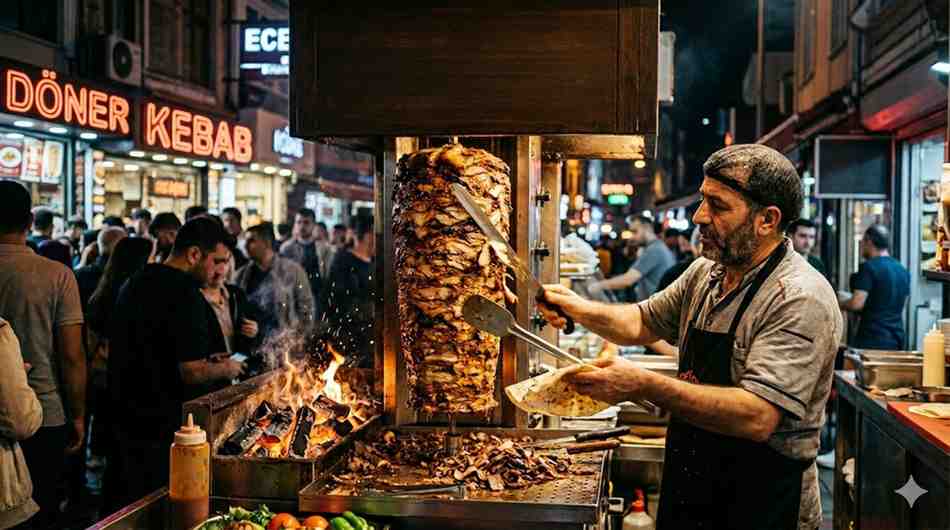
Döner Kebab: The Spinning Legend That Conquered the World
Lisa Park • October 27, 2026
Few foods have traveled across borders, cultures, and generations as successfully as the beloved döner kebab. From bustling streets in Istanbul to late-night snack shops in Berlin, the döner has evolved from a regional Ottoman dish into one of the world’s most recognizable street foods. Juicy layers of seasoned meat, shaved fresh from a rotating spit, tucked into warm bread with vegetables and sauce — it is simple, satisfying, and endlessly adaptable.
But the story of döner kebab is much more than fast food. It is a story of migration, innovation, culinary craftsmanship, and cultural identity. To understand why millions of people crave döner every day, we need to look at its origins, evolution, preparation, regional styles, and global impact.
What Is Döner Kebab?
The word “döner” comes from the Turkish verb dönmek, meaning “to turn” or “to rotate.” The name refers to the vertical rotisserie on which the meat slowly spins while roasting. “Kebab,” meanwhile, broadly refers to grilled or roasted meat dishes common throughout the Middle East, Central Asia, and the Mediterranean.
Traditional döner kebab is made by stacking thin slices of marinated meat — usually lamb, beef, chicken, or a combination — onto a large vertical spit. As the stack rotates beside a heat source, the outer layer cooks and becomes crisp. Thin slices are shaved off continuously and served fresh.
The result is a perfect contrast of textures:
- Crispy edges
- Juicy interior meat
- Smoky roasted flavor
- Aromatic spices
- Warm bread and cool vegetables
It is this balance that has made döner kebab universally loved.
The Historical Origins of Döner Kebab
The roots of döner kebab trace back to the culinary traditions of the Ottoman Empire. Long before the invention of the vertical rotisserie, people cooked meat over open fires using horizontal spits. Variations of spit-roasted meat existed across ancient civilizations, from Persia to Anatolia.
However, historians generally credit 19th-century Ottoman cooks in Bursa, Türkiye, with popularizing the vertical method of cooking layered meat. This innovation allowed fats and juices to baste the meat naturally as it rotated, producing richer flavor and better texture.
The vertical rotisserie was revolutionary because it:
- Cooked meat evenly
- Preserved moisture
- Allowed continuous serving
- Increased efficiency for busy food vendors
From Ottoman markets and caravan routes, the dish spread throughout the empire and neighboring regions.
The Evolution Into Modern Street Food
The döner kebab we know today transformed dramatically during the 20th century, especially through migration.
When Turkish immigrants moved to Germany during the 1960s and 1970s, they brought their food traditions with them. In cities like Berlin, enterprising cooks adapted döner for busy urban lifestyles.
Instead of serving sliced meat on a plate with rice, they stuffed it into pita or flatbread with:
- Lettuce
- Tomatoes
- Onion
- Cabbage
- Yogurt sauces
- Chili sauces
This portable sandwich format exploded in popularity. Today, many people associate the modern döner sandwich more with Germany than Türkiye itself.
The German-Turkish döner became:
- Cheap
- Filling
- Fast
- Flavorful
- Convenient for city life
It eventually spread across Europe and beyond.
The Art of Preparing Döner Kebab
Making authentic döner kebab is both science and craftsmanship. The process requires careful preparation at every stage.
1. Selecting the Meat
Traditional versions often use:
- Lamb
- Beef
- Chicken
- Veal
Premium establishments may combine multiple meats for balanced flavor and fat content.
Fat is essential because it keeps the meat juicy while roasting.
2. Marination
The meat is marinated with spices and aromatics such as:
- Yogurt
- Olive oil
- Onion juice
- Garlic
- Paprika
- Black pepper
- Cumin
- Oregano
Some recipes include milk or tomato paste for tenderness and color.
Marination can last anywhere from several hours to an entire day.
3. Layering the Spit
Thin slices of meat are stacked tightly around a long skewer. Fat layers are often inserted between sections.
The stack can weigh anywhere from 10 kilograms to over 100 kilograms in large commercial operations.
4. Slow Roasting
The rotating spit cooks slowly beside:
- Gas flames
- Electric heaters
- Charcoal heat
The outer surface caramelizes while the interior stays juicy.
5. Shaving and Serving
Using a long knife or electric slicer, cooks shave thin strips from the browned exterior.
The meat is immediately served while hot and fresh.
Regional Variations Around the World
One of the most fascinating aspects of döner kebab is how different regions reinvented it.
Turkish Döner
In Türkiye, döner is often served:
- On a plate with rice
- Wrapped in lavash
- In bread called ekmek arası
Sauces are usually lighter compared to European versions.
German Döner
German-style döner is famous for:
- Large stuffed bread
- Heavy vegetable fillings
- Garlic sauce
- Herb yogurt sauce
- Spicy chili sauce
This version dominates much of Europe.
Greek Gyros
The Greek cousin of döner is gyros.
It commonly features:
- Pork or chicken
- Tzatziki sauce
- Fries inside the wrap
- Pita bread
While distinct, gyros shares the same rotisserie heritage.
Arab Shawarma
Shawarma, popular throughout the Middle East, uses:
- Stronger spice blends
- Tahini sauce
- Pickles
- Garlic paste
It is especially beloved in countries like Lebanon and Jordan.
Mexican Al Pastor
Even Mexico has a related dish. Tacos al pastor emerged from Lebanese immigrants who adapted spit-roasted meat traditions using pork and local flavors like pineapple and chili.
It is a perfect example of culinary globalization.
Why Döner Kebab Became So Popular
Many foods become famous temporarily. Döner kebab became a permanent global phenomenon for several reasons.
1. Flavor Complexity
Döner combines:
- Smoke
- Spice
- Charred meat
- Creamy sauces
- Fresh vegetables
- Warm bread
Few fast foods achieve this balance.
2. Convenience
It is portable, quick, and filling — ideal for urban lifestyles.
3. Affordability
Compared to restaurant meals, döner provides substantial value.
4. Adaptability
The dish easily accommodates:
- Vegetarian versions
- Chicken options
- Spicy variations
- Fusion recipes
- Vegan alternatives
5. Cultural Identity
For immigrant communities, döner became both:
- A business opportunity
- A cultural symbol
It represented home while adapting to new societies.
Döner Kebab and Late-Night Food Culture
In many cities, döner shops become nightlife institutions.
Students, office workers, tourists, and partygoers often rely on döner after midnight because it is:
- Hot
- Fast
- Hearty
- Available late
In Europe especially, döner shops are woven deeply into urban culture.
Some cities reportedly have more kebab shops than burger restaurants.
The Economics of Döner
The global kebab industry generates billions of dollars annually.
A successful kebab shop benefits from:
- High turnover
- Relatively low ingredient costs
- Efficient preparation
- Broad customer appeal
This business model explains why döner shops appear in:
- Train stations
- Airports
- Shopping districts
- University areas
- Residential neighborhoods
For many immigrant entrepreneurs, kebab shops provided an accessible route into small business ownership.
Health and Nutrition
Döner kebab’s nutritional profile depends heavily on preparation.
A balanced döner can provide:
- Protein
- Vegetables
- Carbohydrates
- Healthy fats
However, excessive sauces and processed meat can increase:
- Sodium
- Saturated fat
- Calories
Healthier versions use:
- Lean meat
- Whole grain bread
- Fresh vegetables
- Yogurt-based sauces
Grilled chicken döner has become especially popular among health-conscious consumers.
Vegetarian and Vegan Döner
As plant-based eating grows globally, vegan döner has exploded in popularity.
Modern alternatives include:
- Seitan
- Soy protein
- Mushrooms
- Jackfruit
- Falafel-based fillings
Many vegan versions replicate the texture and seasoning of traditional meat remarkably well.
Cities such as Berlin have become pioneers in vegan kebab culture.
Döner Kebab in Pop Culture
Döner kebab has become more than food — it is now a cultural icon.
It appears in:
- Movies
- Music videos
- Comedy sketches
- Social media trends
- Travel blogs
Food influencers frequently rank the “best döner spots” in major cities.
For travelers, trying local kebab shops often becomes an essential experience.
The Debate Over Authenticity
Like pizza or tacos, döner inspires passionate debates.
Questions include:
- What meat is authentic?
- Should sauces be heavy or minimal?
- Is German döner too different from Turkish döner?
- Can vegan versions still be called döner?
These debates reflect how deeply food connects to identity and tradition.
Yet the adaptability of döner may actually be its greatest strength.
Famous Döner Destinations
Istanbul
The spiritual home of traditional Turkish döner.
Berlin
Often considered the capital of modern street-style döner.
London
Known for multicultural kebab innovation.
Amsterdam
A major European kebab hotspot.
Dubai
Home to luxurious and fusion shawarma-döner concepts.
How Technology Changed Döner Production
Modern equipment transformed kebab production.
Innovations include:
- Electric slicers
- Industrial rotisseries
- Frozen meat cones
- Automated temperature systems
Large manufacturers now distribute pre-assembled kebab cones worldwide.
However, many food enthusiasts still prefer handcrafted artisanal döner prepared fresh in-house.
Homemade Döner Kebab
Home cooks increasingly recreate döner using:
- Ovens
- Air fryers
- Vertical countertop grills
- Skewers
Popular homemade methods involve:
- Marinating meat overnight
- Compressing layers tightly
- Roasting slowly
- Thinly slicing before serving
Homemade versions allow customization and healthier ingredients.
The Future of Döner Kebab
The future of döner looks remarkably strong.
Emerging trends include:
- Gourmet kebab restaurants
- Organic meat sourcing
- Plant-based innovation
- Regional fusion styles
- High-end street food concepts
Chefs are experimenting with:
- Wagyu beef döner
- Truffle sauces
- Artisan bread
- Smoked meats
- International spice blends
Despite modernization, the essence remains unchanged: rotating meat cooked slowly over heat and shared with hungry people.
Conclusion
Döner kebab is more than a meal. It is a culinary journey that spans empires, migration, urban life, and globalization. From Ottoman cooking traditions to modern international street food culture, it represents adaptation without losing identity.
Its enduring success comes from a perfect formula:
- Rich flavor
- Simplicity
- Convenience
- Affordability
- Endless customization
Whether enjoyed from a tiny roadside stand in Istanbul, a busy takeaway in Berlin, or a fusion food truck halfway across the world, döner kebab continues to bring people together one delicious slice at a time.
In a world where food trends rise and disappear quickly, döner kebab has proven itself timeless — a spinning symbol of comfort, culture, and culinary craftsmanship.